Buying a replacement chainsaw bar or chain should be simple. Yet one of the most common reasons people order the wrong parts is measuring the guide bar incorrectly or relying on bar length alone.
A 20-inch chain does not fit every 20-inch bar. The same applies to 16-inch, 18-inch, and 24-inch setups. Bar length is only one piece of the puzzle.
This guide explains how to measure chainsaw bar length correctly, where to find the specifications already stamped on your bar, and the other measurements you should check before ordering replacement parts.
Why Accurate Measurement Matters
Getting the correct chainsaw bar and chain combination affects cutting performance, safety, and saw longevity.
Chainsaw injuries remain a serious issue. Research published in 2025 found that an estimated 127,944 people were treated in U.S. emergency departments for chainsaw-related injuries between 2018 and 2022. That works out to roughly 70 emergency department visits every day.
Many factors contribute to injuries, though using the correct cutting equipment and keeping chains properly matched to the bar are basic maintenance steps every chainsaw owner should follow.
What Is Chainsaw Bar Length?
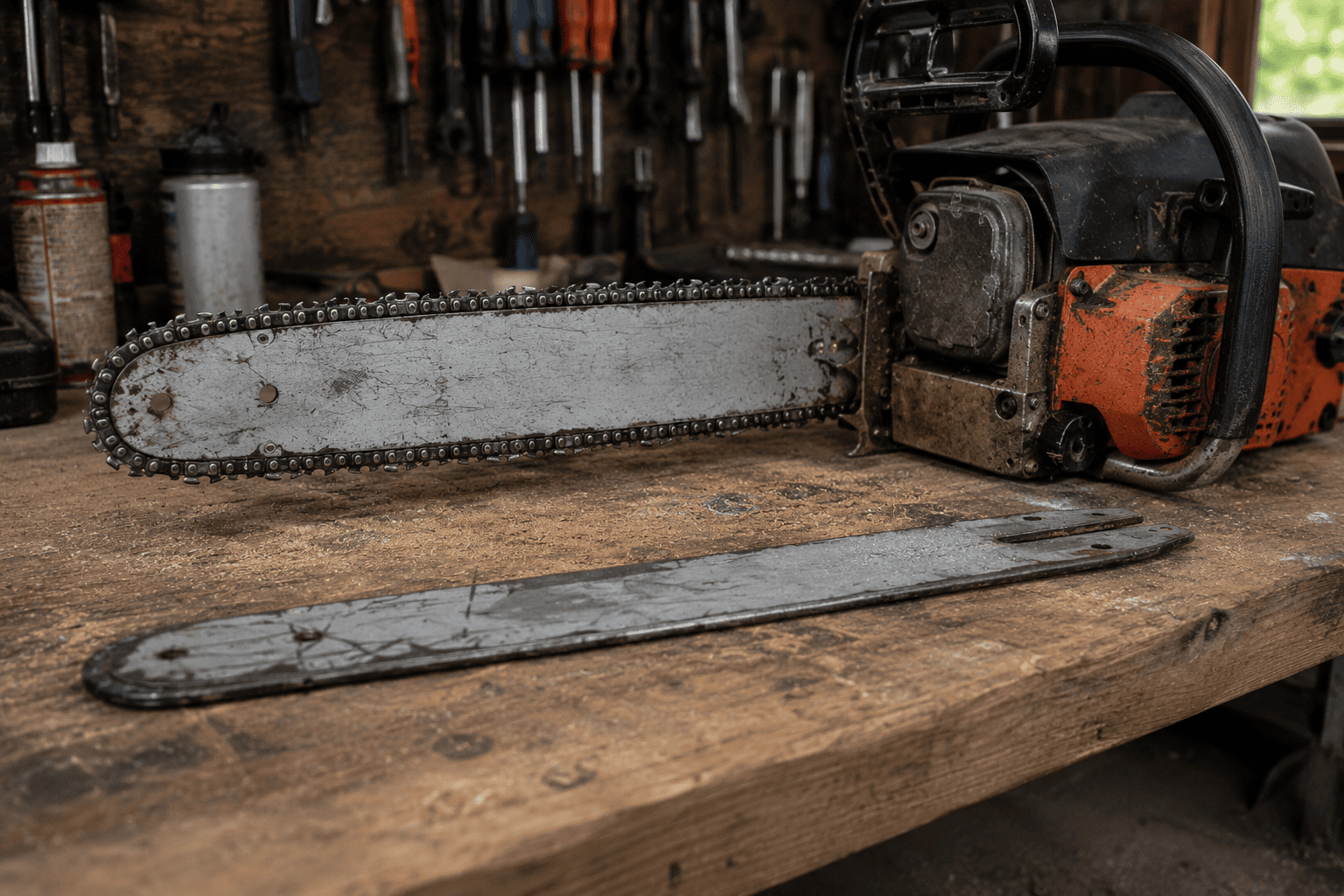
Chainsaw bar length refers to the usable cutting portion of the guide bar.
This is the section that extends from the front of the chainsaw body to the tip of the bar.
Manufacturers typically advertise the cutting length rather than the total length of the guide bar.
For example:
A bar with approximately 16 inches of exposed cutting length is sold as a 16-inch bar.
A bar with approximately 20 inches of exposed cutting length is sold as a 20-inch bar.
The measurement is usually rounded to the nearest standard size.
How to Measure Chainsaw Bar Length
If you need to identify your chainsaw bar length, follow these steps.
Step 1: Turn the Chainsaw Off
Make sure the chainsaw is switched off.
If the saw has been used recently, allow the bar and chain to cool before handling them.
Step 2: Place the Chainsaw on a Flat Surface
Set the saw on a stable bench, work table, or level ground.
Step 3: Measure From the Tip to the Front of the Saw Body
Using a tape measure, start at the very tip of the guide bar.
Measure straight back to the point where the bar enters the chainsaw housing.
Do not measure into the engine housing.
This exposed section is known as the cutting length.
Step 4: Round to the Nearest Standard Bar Size
Most chainsaw bars are sold in standard lengths such as:
12 inch
14 inch
16 inch
18 inch
20 inch
24 inch
28 inch
If your measurement is 15.7 inches, your bar is generally considered a 16-inch bar.
If it measures 19.8 inches, it is generally classified as a 20-inch bar.
The Difference Between Cutting Length and Total Bar Length
This is where many chainsaw owners get confused.
There are actually two different measurements:
Cutting Length
The visible section extending from the chainsaw body.
This is the measurement most manufacturers use when describing guide bars.
Total Bar Length
The complete length of the guide bar after removing it from the chainsaw.
The section hidden inside the powerhead is included in this measurement.
A bar advertised as 20 inches will typically be longer than 20 inches when removed from the saw.
When purchasing replacement parts, the advertised cutting length is usually the measurement you need.
Check the Bar First Before Measuring
Before reaching for a tape measure, inspect the guide bar carefully.
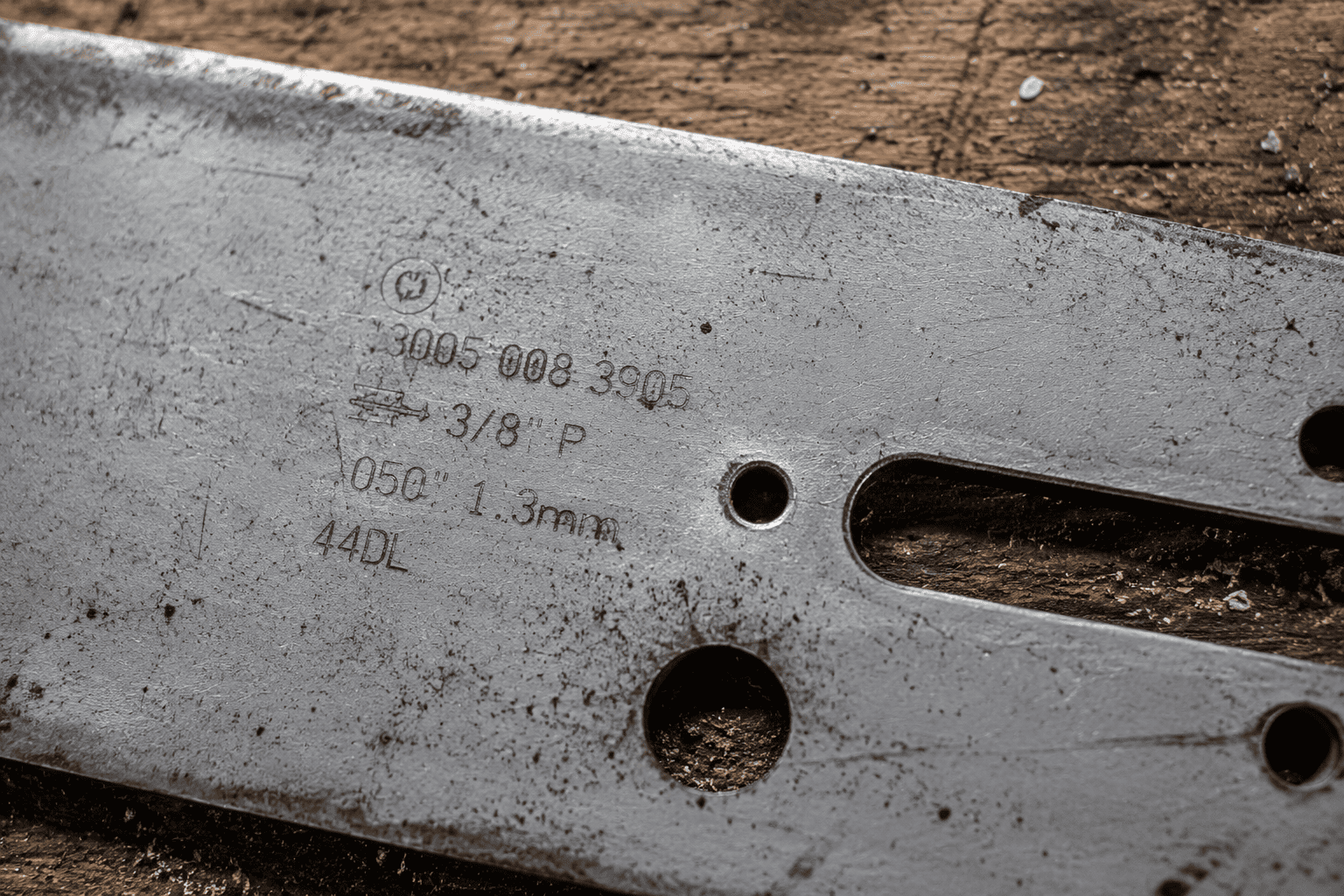
Many manufacturers stamp specifications directly onto the bar near the mounting area.
You may find:
Bar length
Chain pitch
Chain gauge
Recommended drive link count
Manufacturer part number
If the markings remain visible, this is often the quickest way to identify the correct replacement setup.
Why Bar Length Alone Is Not Enough
One of the biggest mistakes chainsaw owners make is ordering a replacement chain based solely on chainsaw bar length.
Bar length only tells part of the story.
You should identify four specifications:
Bar length
Chain pitch
Chain gauge
Drive link count
All four measurements must match.
If one specification is wrong, the chain may not fit correctly.
What Is Chain Pitch?
Chain pitch refers to the spacing between chain links.
It determines compatibility between the chain, guide bar, and drive sprocket.
Common chainsaw pitches include:
1/4"
.325"
3/8" Low Profile
3/8"
.404"
Pitch must match the drive sprocket and guide bar specifications. A chain with the wrong pitch will not operate correctly.
What Is Chain Gauge?
Gauge refers to the thickness of the drive links that sit inside the guide bar groove.
The chain gauge and guide bar gauge must match exactly. Oregon identifies the most common gauges as:
.043"
.050"
.058"
.063"
Using the wrong gauge can create poor chain fitment and performance issues.
What Are Drive Links?
Drive links are the small teeth on the underside of the chain that run inside the guide bar groove.
The total number of drive links determines chain loop length.
Many chainsaw owners assume chain length is measured in inches.
In reality, replacement chains are typically identified using drive link count along with pitch and gauge.
Having all five details greatly reduces the chance of ordering incorrect parts.
Common Mistakes When Measuring a Chainsaw Bar
Measuring the Entire Bar
Many people measure the full guide bar after removing it from the saw.
This often produces a larger number than the advertised bar size.
Measure the exposed cutting length instead.
Assuming All 20-Inch Chains Are the Same
A 20-inch chain may have different drive link counts, gauges, or pitches depending on the saw model.
Ignoring Gauge and Pitch
Bar length is only one specification.
The chain still needs the correct gauge and pitch to function properly.
Guessing Based on Brand
Two chainsaws from the same manufacturer can use completely different cutting setups.
Always verify the specifications.
Can You Fit a Longer Bar to Your Chainsaw?
Some chainsaws can accommodate multiple bar lengths.
Others are designed for a specific range.
Before fitting a longer guide bar, check:
Manufacturer recommendations
Engine power output
Chain compatibility
Sprocket compatibility
Oiling capacity
Running a bar that is too long for the saw can reduce cutting performance and place additional strain on the engine.
Frequently Asked Questions
How do I measure chainsaw bar length?
Measure from the tip of the guide bar to the point where the bar enters the chainsaw housing. Round the result to the nearest standard bar size.
Is chainsaw bar length the same as chain length?
No. Bar length refers to the guide bar. Chain size is determined by pitch, gauge, and drive link count.
Where is the chainsaw bar length printed?
Many guide bars have specifications stamped near the mounting area or bar tail.
What if the markings are worn off?
Use a tape measure to identify the bar length and count the drive links. You can then determine pitch and gauge using the chain markings, owner's manual, or replacement parts information.
What measurements do I need before ordering a replacement chain?
You should identify:
Bar length
Pitch
Gauge
Drive link count
These four measurements are the foundation of accurate chain selection.
Need Help Identifying Your Chainsaw Bar?
If you're still unsure how to measure a chainsaw bar or identify the correct replacement chain, gather as much information as possible from the guide bar and chainsaw model plate before ordering.
A clear photo of the chainsaw model and existing bar markings can often help identify the correct setup much faster than measuring alone.
Getting the right fit the first time means less downtime, better cutting performance, and fewer headaches when your replacement parts arrive.
With a passion for business that started at just ten years old—when he and Grant, ran a worm farm out of an old bathtub—Charlie has played a key role in growing Jono & Johno into a trusted name in the industry. He oversees product sourcing, customer education, and the company’s online growth, ensuring customers have access to the right equipment and information to get the job done.
Through years of experience, Charlie has developed a deep understanding of the outdoor power equipment industry and is dedicated to helping customers find the right gear, troubleshoot common issues, and keep their machines running smoothly.
* Watch the video above for a hands-on demonstration before or after reading this guide.
If you're looking for a straightforward, no-power-tools method to maintain...
Maximise your chainsaw's cutting power with these essential maintenance tips. Get reliable performance with quality chainsaws and parts from Jono & Johno....