

















How to Use a Chainsaw Grinder: Step-by-Step Sharpening Guide
*Watch the full video guide above before or after reading to see each step in action. Keeping your chainsaw chain sharp is critical for clean cuts and safe...
Read More..
For most homeowners, a 16-inch chainsaw is the right choice.
It has enough cutting capacity for firewood, storm clean-up, fallen branches, and small tree removal, yet it's still manageable for regular use.
That doesn't mean a 16-inch chainsaw is the right fit for everyone.
Someone pruning fruit trees around the backyard has very different requirements from a property owner cutting large hardwood logs for firewood. Choosing the wrong size can leave you struggling through jobs that should be straightforward or carrying around far more weight than necessary.
This guide explains how chainsaw sizes work, how to choose the right bar length for your needs, and what to look for when selecting a replacement chain.

|
|
|
|
|
|
|
|
|
|
|
|
|
|
|
|
|
|
|
|
|
|
|
|
|
|
|
If you're unsure where to start, a quality 16-inch chainsaw remains the most versatile option for the average Australian homeowner.
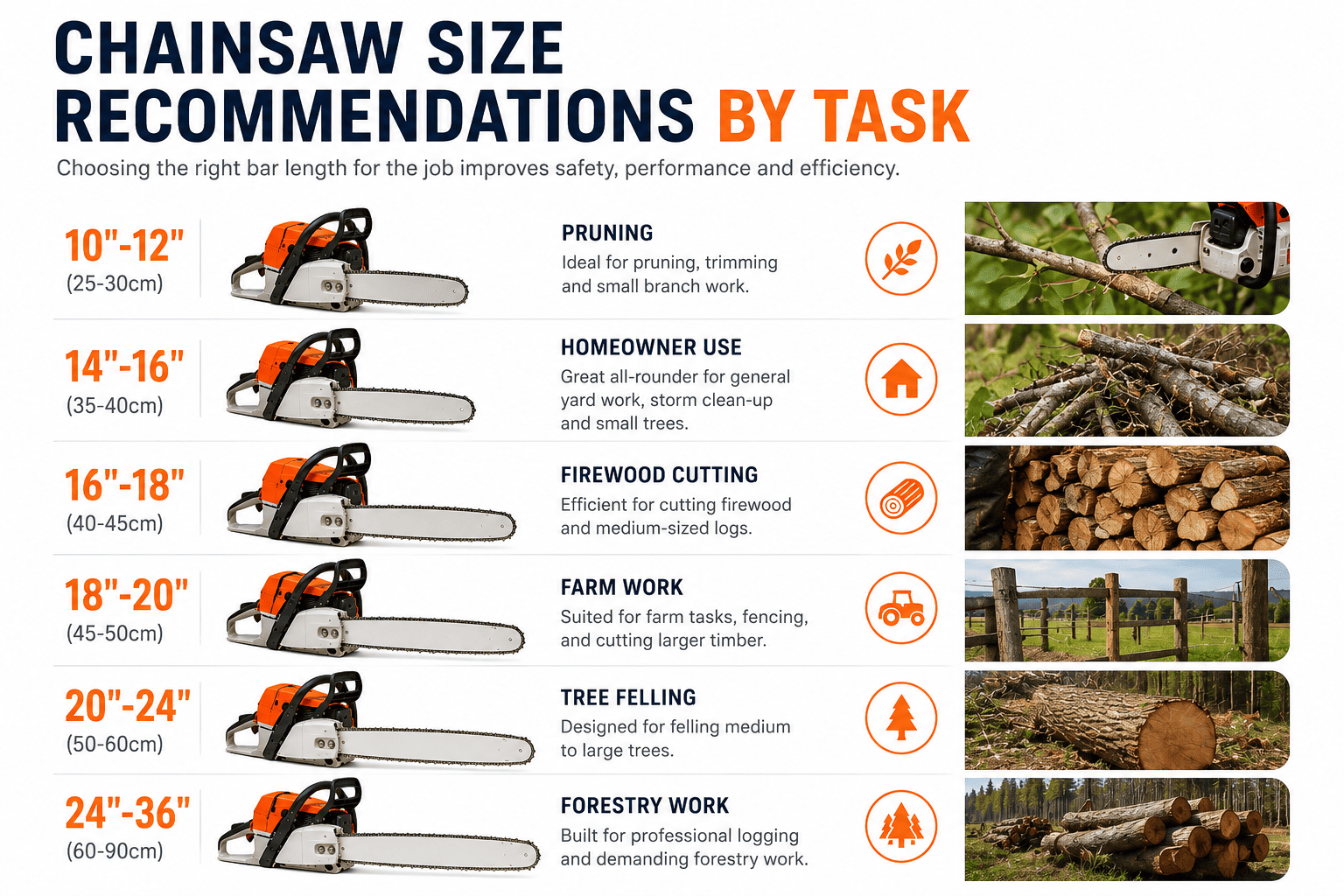
When discussing chainsaw sizes, most people are referring to the guide bar length.
The guide bar is the metal bar that supports and guides the chain during cutting. A longer bar allows you to cut larger timber in a single pass, though that doesn't automatically make it the better option.
Engine size matters too.
A longer guide bar requires more torque to pull the chain through timber efficiently. That's why professional chainsaws often pair longer bars with larger engines.
For everyday property maintenance, the best chainsaw isn't usually the biggest one available. It's the one that comfortably handles the work you do most often.
Many buying guides jump straight into bar lengths. A simpler approach is to start with the work you actually need the saw to perform.
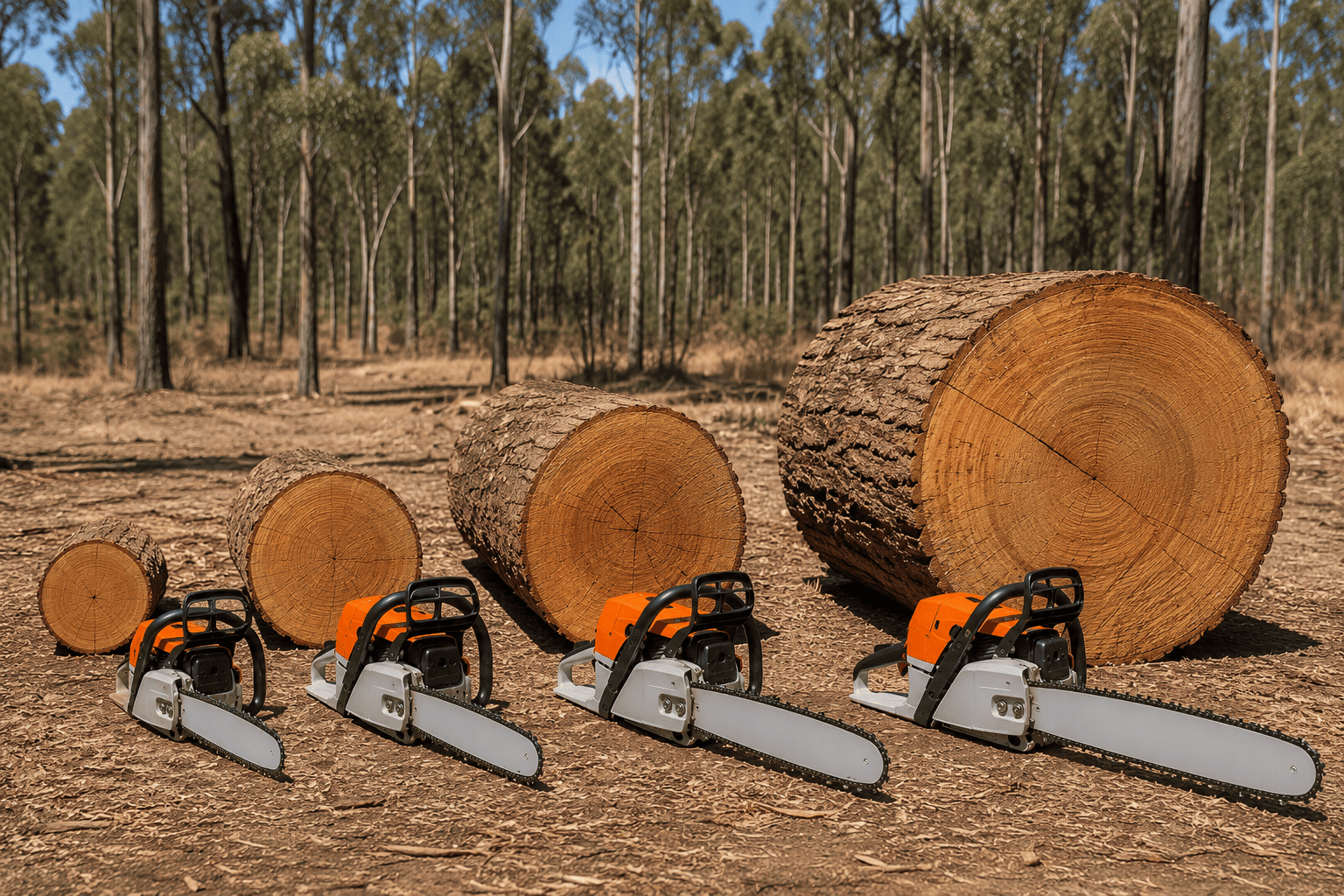
The diameter of the timber should guide your decision.
As a general rule, the guide bar should be at least two inches longer than the wood you're cutting.
|
|
|
|
|
|
|
|
|
|
|
|
|
|
|
|
|
|
|
|
|
Experienced operators can cut larger timber using multiple passes. For most users, matching the saw to the timber size makes cutting easier and safer.

A chainsaw used twice a year has different requirements from one used every weekend.
For occasional garden work, a lightweight battery-powered chainsaw is often all that's needed.
If you're regularly cutting firewood, maintaining acreage, or clearing storm damage, stepping up to a larger petrol model can save time and effort.
One of the most common mistakes people make is buying a chainsaw that is larger than they can comfortably control.
A heavier chainsaw can become tiring surprisingly quickly.
For new users, a smaller saw is often the smarter option. Better control usually leads to better cutting results.
These compact saws are ideal for:
Their lighter weight makes them easier to handle, especially during overhead cutting.
Battery-powered models dominate this category and are popular with homeowners looking for a simple, low-maintenance solution.
This is where most homeowners should focus their attention.
A 14-inch or 16-inch chainsaw can comfortably handle:
Many outdoor equipment specialists consider a 16-inch chainsaw the most versatile size available.
These saws suit larger properties and users who regularly work with thicker timber.
They're commonly used for:
At this size, engine performance becomes increasingly important.
Large chainsaws are built for demanding work.
Typical applications include:
Most homeowners will never need a chainsaw in this category.
After years of helping customers choose outdoor power equipment, one pattern appears repeatedly.
People often buy a larger chainsaw than they actually need.
The thinking is understandable.
A larger saw feels like a safer investment because it can tackle bigger jobs.
In reality, extra weight often becomes the bigger issue.
A chainsaw that is uncomfortable to use can lead to fatigue, reduced control, and slower cutting. For many homeowners, a quality 16-inch chainsaw will handle almost every task they'll encounter around the property.
Buying for your regular jobs rather than your biggest possible job usually leads to a better choice.
Firewood cutting places different demands on a chainsaw depending on the timber species and log diameter.
For occasional firewood preparation, a 14-inch or 16-inch chainsaw is often sufficient.
If you're regularly cutting larger hardwoods such as red gum, ironbark, or spotted gum, an 18-inch chainsaw provides additional cutting capacity without becoming excessively heavy.
For most households heating with wood, a 16-inch or 18-inch chainsaw offers the best balance of performance and handling.
The choice between battery and petrol often comes down to workload.
Best suited for:
Battery chainsaws are quieter, easier to start, and require less maintenance.
Best suited for:
Petrol chainsaws remain the preferred option for larger cutting jobs and extended operating time.
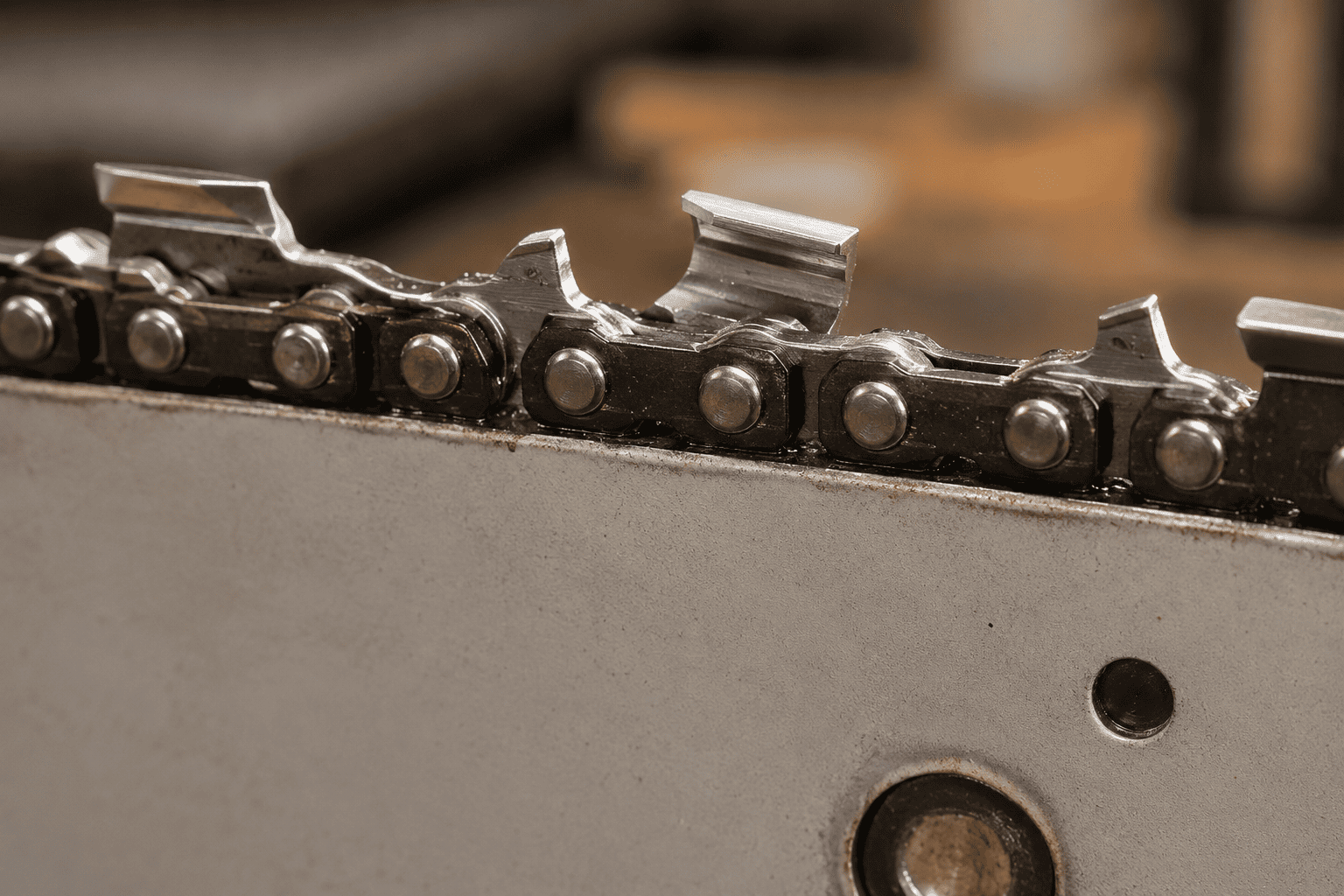
Choosing the correct replacement chain is just as important as selecting the right chainsaw size.
Every chainsaw chain is identified using three measurements.

Pitch refers to the distance between the chain links.
Common pitches include:
Gauge refers to the thickness of the drive links that sit inside the guide bar.
Common gauges include:
Drive links determine the overall length of the chain.
The correct drive link count must match the guide bar being used.
The easiest place to check is the guide bar itself.
Most manufacturers stamp the chain specifications directly onto the bar.
You can usually find:
The owner's manual and chain packaging can provide the same information.
Matching all three measurements is the simplest way to purchase the correct replacement chain.
|
|
|
|
|
|
|
|
|
|
|
|
|
|
|
|
|
|
|
|
|
|
|
|
For most homeowners, a 16-inch chainsaw remains the safest recommendation. It provides enough cutting capacity for common property maintenance tasks without the extra weight and bulk of larger professional models.
Co-Founder & Director, Jono & Johno
With a passion for business that started at just ten years old—when he and Grant, ran a worm farm out of an old bathtub—Charlie has played a key role in growing Jono & Johno into a trusted name in the industry. He oversees product sourcing, customer education, and the company’s online growth, ensuring customers have access to the right equipment and information to get the job done.
Through years of experience, Charlie has developed a deep understanding of the outdoor power equipment industry and is dedicated to helping customers find the right gear, troubleshoot common issues, and keep their machines running smoothly.
*Watch the full video guide above before or after reading to see each step in action. Keeping your chainsaw chain sharp is critical for clean cuts and safe...
Read More..
Did you know that the chainsaw was first invented in 1780 ? It was originally a medical tool but later turned into a tool for chopping down trees. Today, no one can...
Read More..
Maximise your chainsaw's cutting power with these essential maintenance tips. Get reliable performance with quality chainsaws and parts from Jono & Johno....
Read More..